
DTF Equipments
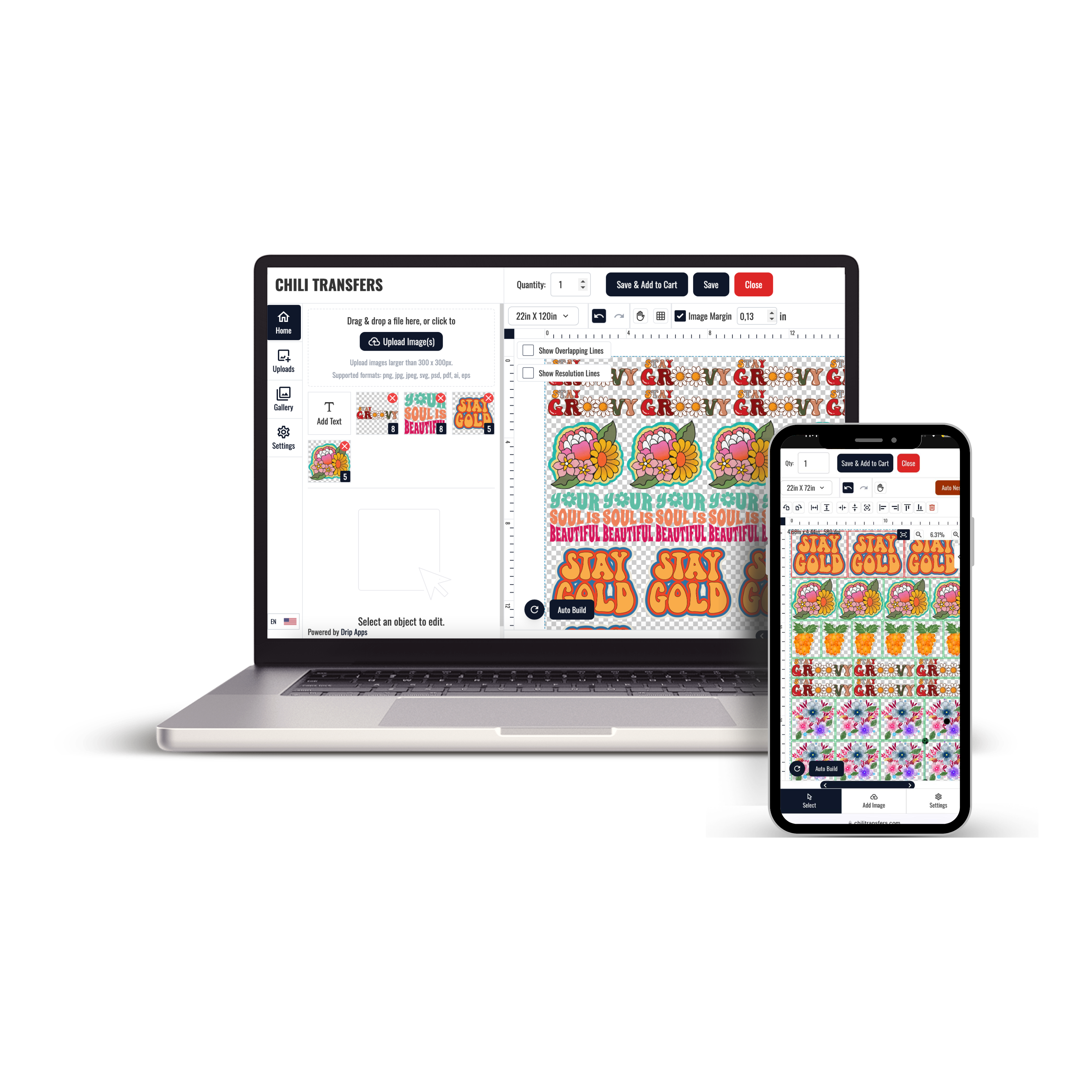



DTF printing equipment should be selected around the production process you actually plan to manage. A small apparel operation, a repeat custom-print workflow, and a full in-house transfer-production setup do not require the same equipment.
Before investing in machines, decide whether you want to produce transfers yourself or work with prepared DTF Transfers and focus on garment application.
What Is DTF Printing Equipment?
DTF printing equipment refers to the machines and production tools used throughout a Direct-to-Film workflow. Depending on the setup, this can include equipment for printing transfers, applying adhesive powder, curing the transfer, and pressing the finished transfer onto apparel.
Not every business needs to manage every stage internally. Your equipment plan should reflect the part of the workflow you actually want to control.
Start by Defining Your DTF Production Workflow
Before comparing equipment, define the production model.
- Will you print DTF transfers in-house?
- Will you order prepared transfers and apply them yourself?
- Will you produce individual designs or multiple designs together?
- How many garments do you expect to decorate regularly?
- How much workspace is available?
- Who will operate and maintain the equipment?
These answers determine which equipment is essential and which equipment may be unnecessary for your current operation.
Core Stages of a DTF Equipment Setup
A complete DTF production workflow can involve several stages. Each stage has a different function and equipment requirement.
Transfer Printing
If you plan to manufacture transfers in-house, the production side requires a DTF printer that supports the required ink, film, and white-ink workflow.
This is a different business decision from simply applying a prepared transfer because it introduces printing equipment, consumables, maintenance, software, workspace, and process-control requirements.
Current printer options can be reviewed through Buy DTF Printer.
Powder and Curing
After printing, DTF production also requires adhesive powder application and curing. The exact equipment depends on the printer, production volume, film width, and workflow.
Some operations may use manual powder handling, while higher-volume setups may use dedicated powder-shaker and curing equipment.
Heat-Press Application
The heat press is part of the garment-decoration stage. It applies controlled heat and pressure so the prepared transfer can be applied to the intended garment.
Review Heat Press for DTF Transfers when evaluating the application side of the production setup.
How to Choose DTF Equipment
The right equipment is not automatically the largest or most advanced machine. It should match the actual production requirement.
Consider Production Volume
Estimate the number of transfers or garments you realistically expect to produce. Occasional custom orders and repeat commercial production may require different levels of equipment capacity.
Consider Available Workspace
Equipment selection should account for the complete production area, not only the printer footprint.
Plan space for:
- Printer clearance.
- Film loading and unloading.
- Powder handling.
- Curing equipment.
- Transfer cooling and storage.
- Heat pressing.
- Maintenance access.
Consider the Parts of Production You Want to Manage
Some businesses want complete in-house transfer production. Others only want to apply finished transfers.
If you want to skip the printing, powdering, and curing stages, review DTF Transfers Ready to Press Wholesale and compare that workflow with operating a full production setup.
Beginner DTF Equipment vs. Repeat Production
A new apparel operation should not automatically build the same equipment setup as an established repeat-production workflow.
For lower-volume production, the main priority may be learning a controlled pressing process and understanding artwork, sizing, and garment placement.
As production becomes more repeatable, equipment decisions can be evaluated around:
- Higher order frequency.
- More artwork versions.
- Larger transfer quantities.
- Repeat customer designs.
- Longer production sessions.
- Additional operator workload.
Equipment should scale because production demand has changed, not simply because additional machines are available.
Equipment Planning for Gang Sheet Workflows
Projects involving multiple graphics or repeated designs may use gang sheets rather than treating every transfer as a separate production item.
Review DTF Gang Sheets when several transfers need to be organized together.
In a gang-sheet workflow, the equipment plan should also account for how transfers will be separated, identified, stored, and matched to garments before pressing.
Organize the Production Batch
- Identify every design.
- Confirm each transfer size.
- Separate artwork versions.
- Match transfers to the intended garments.
- Confirm quantities before pressing.
Production organization is just as important as equipment capacity.
Do You Need a Full In-House DTF Setup?
A full in-house DTF system may be appropriate when transfer production itself is a core part of the business. However, it also creates additional responsibilities for operation, maintenance, materials, quality control, and troubleshooting.
If your primary business is decorating apparel, ordering prepared transfers may allow you to build a simpler workflow around garment handling and heat pressing.
Ask these questions before expanding the equipment list:
- Is transfer production a core service?
- Is current order volume high enough to justify the setup?
- Who will operate and maintain the equipment?
- Is there enough workspace for the complete workflow?
- Do you want to manage white ink, consumables, and maintenance?
- Would prepared transfers meet the current production need?
Printer Capacity Should Match Curing Capacity
A production system should be evaluated as a complete line rather than as separate machines.
A printer that produces transfers faster than the powdering or curing stage can handle may create a bottleneck. The same applies if the heat-press stage cannot keep up with the number of finished transfers being produced.
Compare the realistic capacity of:
- Printing.
- Powder application.
- Curing.
- Transfer handling.
- Heat pressing.
Maintenance Is Part of the Equipment Decision
In-house DTF production requires routine equipment maintenance, especially around the printer and white-ink system.
Before buying a machine, review:
- Nozzle-check procedures.
- White-ink circulation or agitation.
- Capping-station maintenance.
- Wiper maintenance.
- Cleaning requirements.
- Waste-ink handling.
- Approved shutdown procedures.
- Replacement-part availability.
Equipment that fits the budget but not the available maintenance time may still be a poor operational match.
DTF Equipment and Artwork Control
Equipment cannot correct an incorrect artwork version, wrong transfer size, or poor production planning. A reliable workflow also needs artwork control.
Pre-Production Checklist
- Final artwork approved.
- Transfer dimensions confirmed.
- Garment selected.
- Print placement confirmed.
- Quantity counted.
- Production method selected.
Completing these checks before production reduces the chance of repeating a mistake across multiple garments.
Keep DTF and UV DTF Equipment Separate
DTF apparel production and UV DTF are different workflows. They should not be combined simply because both use the term DTF.
Standard DTF equipment supports textile transfer production and heat-press application.
UV DTF equipment follows a different printing and application path intended primarily for compatible hard surfaces.
Choose equipment according to the actual product you intend to decorate.
Common DTF Equipment Buying Mistakes
Buying Before Defining the Workflow
Decide whether you need transfer production, garment application, or both before choosing equipment.
Choosing Only by Machine Price
Consider consumables, maintenance, software, curing equipment, heat pressing, labor, and workspace as part of the total setup.
Buying More Capacity Than the Business Needs
Extra print width or automation only helps when the production workload can use it.
Ignoring Maintenance Requirements
Printer maintenance is part of normal in-house DTF production and should be included in the operating plan.
Ignoring the Rest of the Production Line
Printing, powdering, curing, and pressing need compatible production capacity.
DTF Printing Equipment Checklist
- Production model defined.
- Expected daily or weekly volume estimated.
- Required print width identified.
- Printer requirements reviewed.
- Powder and curing workflow planned.
- Heat-press capacity confirmed.
- Workspace measured.
- Maintenance requirements understood.
- Consumables and replacement parts considered.
- Operator responsibility assigned.
- Prepared-transfer alternative compared.
Build the Equipment Setup Around the Finished Product
The best way to plan DTF printing equipment is to work backward from the finished apparel product.
Define what you want to produce, how often you expect to produce it, which stages you want to manage internally, and how much production capacity you actually need.
For a prepared-transfer workflow, explore DTF Transfers. If you want to evaluate in-house printing, review Buy DTF Printer. For garment application equipment, review Heat Press for DTF Transfers.